Best Girder Crane Types for Your Industrial Needs?
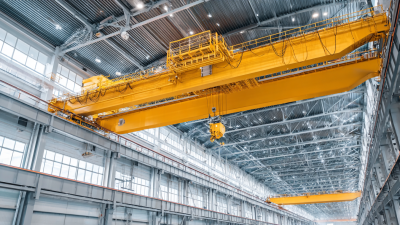
In modern industries, selecting the right lifting equipment is crucial. Among various options, the Girder Crane stands out for its versatility and strength. This type of crane can handle heavy loads, making it essential for manufacturing and warehousing operations. Its structure often consists of parallel girders that support the trolley and hoist, allowing for efficient movement.
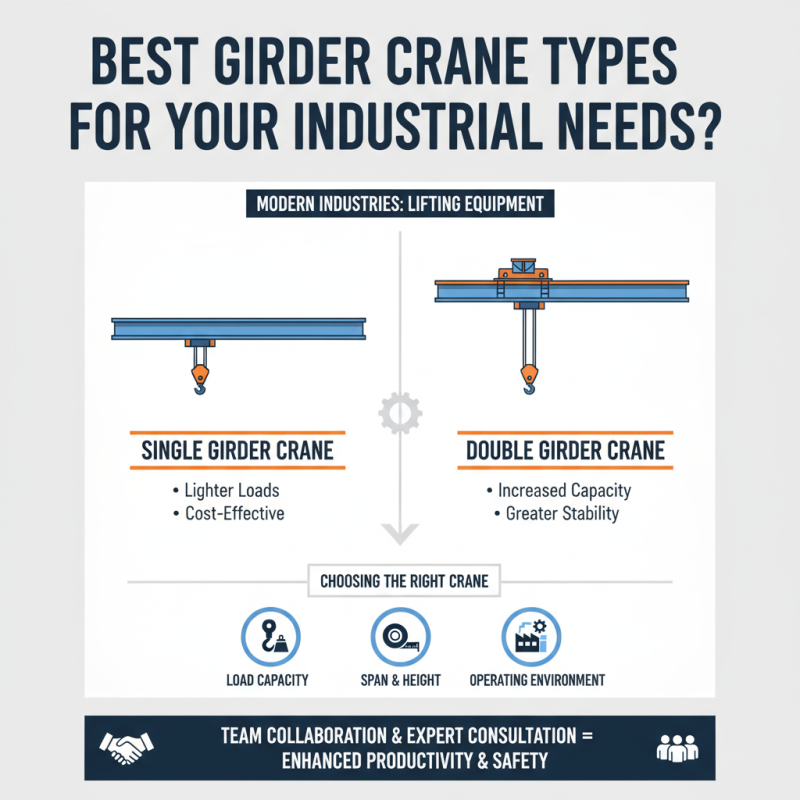
Different types of Girder Cranes cater to various industrial needs. For instance, single girder cranes are ideal for lighter loads, while double girder cranes provide increased capacity and stability. Understanding these distinctions helps in making informed choices. Many companies overlook the importance of proper selection. An unsuitable crane can lead to inefficiencies and safety issues.
Choosing a Girder Crane involves evaluating your specific requirements. Factors like load capacity, span, and operating environment play a vital role. It is essential to involve your team in this decision-making process. Collaborating with experts can yield better results. While you may have preferences, ensuring the right fit for your operation will enhance productivity in the long run.
Types of Girder Cranes: An Overview of Industrial Applications
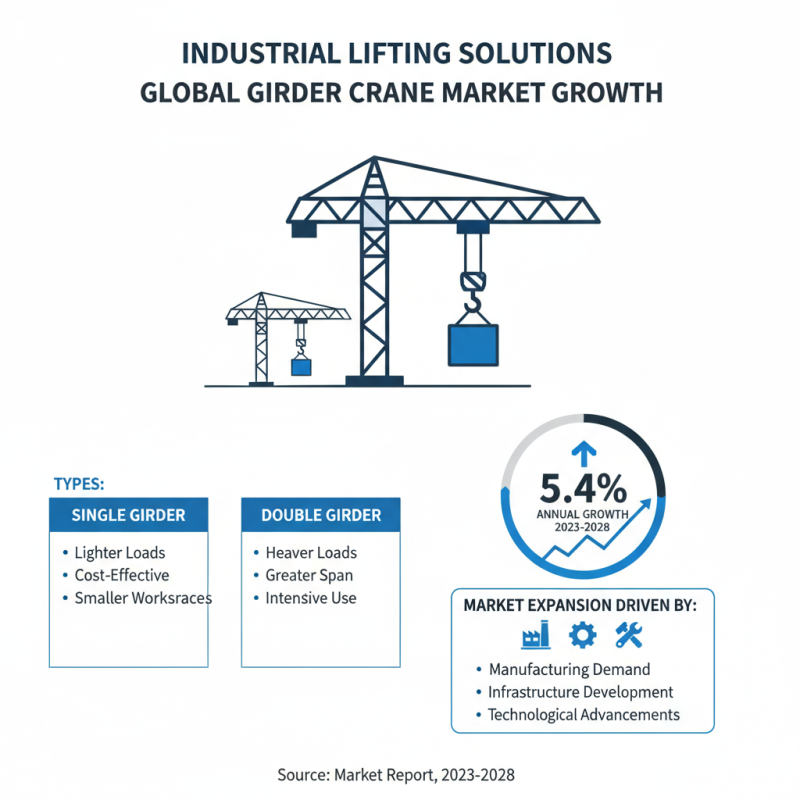
Girder cranes are essential in various industrial applications. They offer different configurations, such as single girder and double girder designs. Each type serves unique purposes based on load capacity and workspace. According to a recent market report, the global crane market size is expected to increase by 5.4% annually from 2023 to 2028. This shows the growing need for effective lifting solutions.
Single girder cranes are often used in smaller facilities. They provide efficient lifting with less overhead clearance. Their simplicity makes them a popular choice. In contrast, double girder cranes handle heavier loads. They require more space but offer increased stability. Many factories opt for them for heavy-duty tasks. The right choice depends heavily on specific operational needs and space availability.
Tips: When selecting a girder crane, consider your facility's height and load requirements. Analyze your workflow to optimize placement. Don’t overlook service and maintenance needs; these can impact performance. Regular inspections can prevent expensive downtimes. Adapting to changing workloads is also vital. Not every crane type fits every situation.
Understanding the Key Components of Girder Cranes and Their Functions
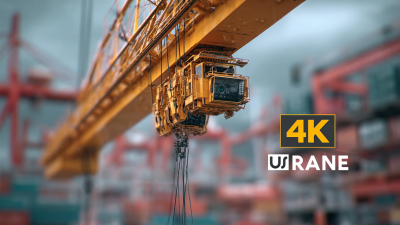
Girder cranes are essential in various industrial settings. Their design provides strength and efficiency, making them suitable for heavy lifting. The key components include the girder, hoist, end trucks, and wheels. Each part plays a vital role in the crane’s operation. For instance, the girder acts as the main supporting structure. It allows the crane to carry heavy loads with stability.
According to a recent industry report, nearly 70% of industrial facilities utilize overhead cranes. This shows their importance in manufacturing and warehousing applications. The hoist component is crucial, responsible for lifting and lowering materials. It's necessary to choose a hoist with the right capacity, as overload can lead to failures. End trucks enable movement, allowing cranes to traverse the workspace. Proper alignment and size are critical to avoid operational inefficiencies.
A common issue is misalignment of the girder or wheels. This can lead to noisy operations or increased wear. Regular inspections and maintenance are often overlooked but can enhance safety and longevity. Industry standards recommend checking these components regularly, but compliance can be inconsistent. Understanding these key elements ensures safe and efficient crane operations, ultimately benefiting productivity.
Best Girder Crane Types for Your Industrial Needs
| Crane Type |
Load Capacity (tons) |
Span Length (meters) |
Key Features |
Best For |
| Single Girder Crane |
1 - 20 |
3 - 25 |
Cost-effective, compact design |
Small workshops, manufacturing |
| Double Girder Crane |
5 - 100 |
10 - 40 |
High load capacity, wide span |
Heavy industrial operations |
| Top Running Crane |
1 - 50 |
5 - 30 |
Operates above the rails, better clearance |
Warehouses, logistics |
| Under Running Crane |
1 - 10 |
5 - 20 |
Space-saving, lower building height required |
Small factories, garage setups |
| Explosion-Proof Crane |
1 - 20 |
5 - 30 |
Designed for hazardous environments |
Chemical, petrochemical industries |
Comparison of Single Girder vs. Double Girder Cranes in Industry Use
When choosing between single girder and double girder cranes, it’s important to understand their main differences. Single girder cranes are often lighter and less expensive. They typically handle loads up to 10 tons. Meanwhile, double girder cranes can support heavier loads, often exceeding 20 tons. They’re more suitable for larger spans, ideal for big industrial environments.
In many sectors, cranes are vital for efficiency. A report from the American Crane & Hoist Association states that 70% of industrial applications involve some form of crane lifting. This highlights their importance in manufacturing, warehousing, and shipping operations. However, these systems require proper maintenance and sometimes unexpected repairs, leading to downtime. Choosing the right type may prevent such issues.
Tip: Consider the space available in your facility. A single girder crane requires less vertical space. Conversely, double girder cranes may provide better lifting height. Evaluate your loading frequency to make an informed choice. Don’t ignore the possibility of future expansion needs; they could change your requirements. Crafting the right decision now can yield long-term benefits.
Comparison of Single Girder vs. Double Girder Cranes
Load Capacity and Performance Metrics for Various Girder Crane Types
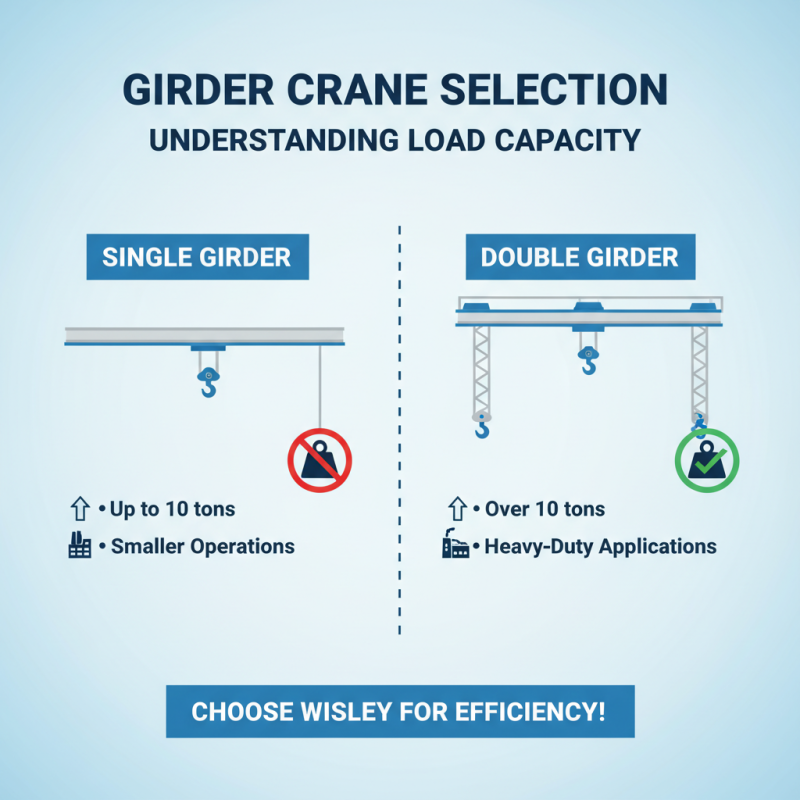
When selecting a girder crane, understanding load capacity is crucial. Different types of girder cranes, such as single and double girder models, offer varying performance metrics. A single girder crane typically supports lighter loads up to 10 tons, making it suitable for smaller operations. However, its limited capacity can be a drawback for heavy-duty applications.
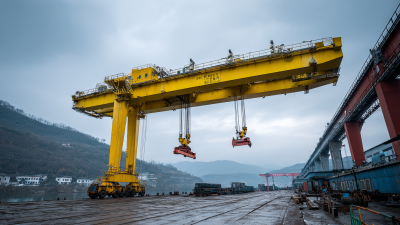
On the other hand, double girder cranes can handle heavier loads, often exceeding 20 tons. They possess a wider span, allowing them to cover more extensive work areas. This increased capacity may lead to challenges in installation and maintenance. Moreover, with greater power comes the need for more intensive safety protocols. Operators must be adequately trained to handle the complexities involved.
It’s essential to evaluate the operational environment as well. For instance, the height of the building, the frequency of use, and space constraints play significant roles. These variables can impact the crane's reliability and efficiency. Ignoring these factors may result in inefficiencies or accidents. Each crane type has its strengths and weaknesses that need careful consideration.
Selecting the Right Girder Crane for Your Specific Industrial Needs
Choosing the right girder crane is essential for optimizing your industrial operations. Each facility has unique requirements, making selection a critical process. Consider the crane's load capacity, lift height, and span. This will directly affect efficiency and safety in your operations.
Assess your workspace limitations. Is the area open or crowded? A top-running crane works best in expansive spaces. For tighter environments, a under-slung design may be more suitable. However, this choice can complicate installation. Think about maintenance access as well. It often gets overlooked but has a big impact on long-term costs.
Understanding your material handling needs is vital. Will you be lifting heavy machinery or light components? This can dictate the type of girder to choose. Keep in mind that heavier loads require sturdier designs. An unsuitable crane can lead to accidents or inefficiencies. Reflection on past experiences can help guide your decision. Identifying the right girder crane is not just about functionality. It’s about ensuring safety and boosting productivity in a challenging environment.