What to Consider When Choosing a Ceiling Crane?
When selecting a Ceiling Crane, several critical factors emerge, according to industry expert John Smith. He states, “Choosing the right Ceiling Crane can significantly impact operational efficiency.” Understanding the specific needs of your workspace is crucial. The type of material being lifted, the overhead space available, and the crane's maximum load capacity are key considerations.
In the world of manufacturing, Ceiling Cranes play a vital role. They enhance productivity by allowing seamless movement of heavy items. Yet, not every Ceiling Crane suits every environment. A mismatch could lead to inefficiencies or accidents. Evaluating different models and their features is essential.
Experts recommend consulting with professionals before making a decision. It’s easy to overlook details like installation requirements and maintenance. Reflecting on these factors can save time and resources in the long run. The right Ceiling Crane can improve workflow, but the wrong one can hinder progress.
Factors Influencing the Selection of Ceiling Cranes
When selecting a ceiling crane, several critical factors come into play. The weight capacity should align with the heaviest loads you plan to lift. Overestimating needs can lead to ineffectiveness, while underestimating can cause safety risks. An accurate assessment of load requirements is essential.
Next, consider the crane's lift height and reach. Measure your workspace carefully. Limited space may restrict crane movement, affecting efficiency. It’s important to balance capability with the physical limitations of your environment. In some cases, adjustable options provide flexibility, but they may complicate use.
Finally, evaluate the power source. Electric cranes offer ease but require available sockets. Manual options are less dependent on infrastructure but demand physical effort. Each option has its merits and drawbacks. A thorough understanding of your operational requirements will guide you toward a suitable choice. Think critically about these elements, as overlooking them can lead to costly mistakes. Every decision should reflect both current needs and future possibilities.
What to Consider When Choosing a Ceiling Crane? - Factors Influencing the Selection of Ceiling Cranes
| Factor |
Description |
Importance Level |
| Weight Capacity |
Determine the maximum load the crane can safely lift. |
High |
| Span Length |
The distance between the support columns where the crane operates. |
Medium |
| Ceiling Height |
The height of the ceiling where the crane will be installed. |
High |
| Type of Loads |
Nature of the items being lifted (e.g., standard pallets, machinery). |
Medium |
| Usage Frequency |
How often the crane will be used during operations. |
High |
| Power Source |
Electric, pneumatic, or manual operation options. |
Medium |
| Safety Features |
Consider any additional safety mechanisms like brakes, emergency stops. |
High |
Load Capacity and Weight Distribution Considerations
Choosing the right ceiling crane is crucial for effective load handling. One of the vital considerations is load capacity. Each crane has a specific weight limit it can safely lift. Exceeding this limit can cause accidents and equipment damage. It's essential to know the maximum weight of your loads. Always factor in the heaviest item you might lift.
Weight distribution also plays a key role. An unevenly distributed load can lead to tipping and instability. Ensure that the weight is centered and balanced on the crane. This not only enhances safety but also improves operational efficiency.
Tips: Always conduct regular inspections of your crane. Look for signs of wear or damage. Document your load calculations clearly. This will provide a reference for future lifts. Additionally, training operators on safe lift practices is important for maintaining safety standards. Sometimes, it’s easy to overlook these small details, but they are essential for reliable operation.
Space and Building Structure Requirements
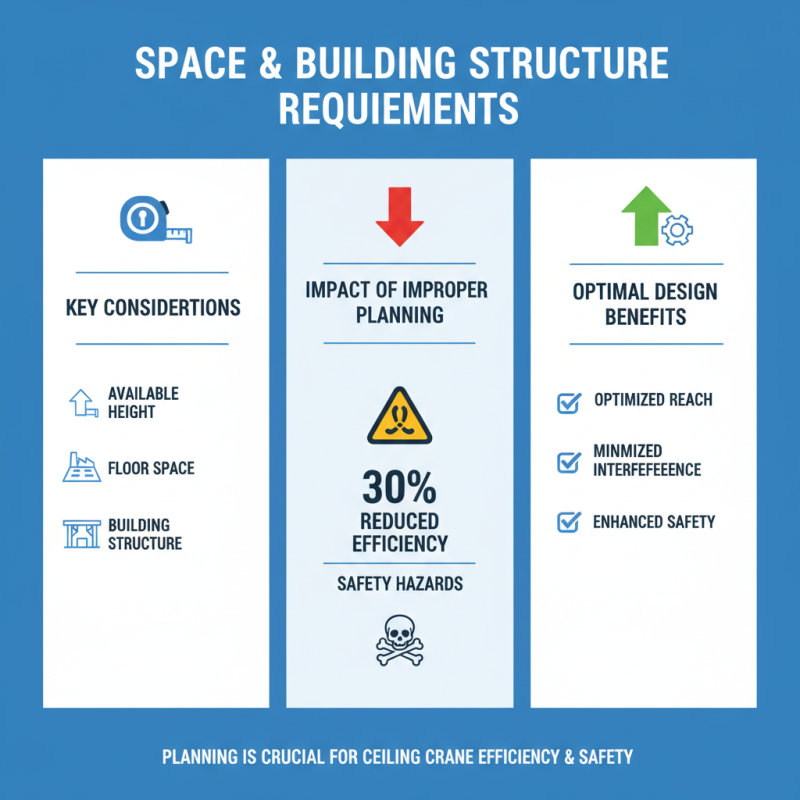
When selecting a ceiling crane, understanding space and building structure is crucial. The available height and floor space can significantly affect design choices. Reports indicate that improper planning can reduce efficiency by 30%. This emphasizes the importance of assessing your workspace. A well-planned layout can optimize reach and minimize interference, while a poorly designed setup can lead to safety hazards.
Consider the load capacity of your building. A typical ceiling crane can lift loads between 1 to 10 tons. However, if the building structure cannot support the crane's weight and dynamic forces, it can lead to serious risks. Structural assessments help avoid potential failures, which can result in costly downtime.
Evaluate the existing structures, such as beams and columns. It's important to know their specifications. Reports show that flexibility in design allows better integration of equipment. Yet, many organizations fail to take these factors into account. They may overlook the need for reinforcement. Mistakes here can have long-term consequences.
Types of Ceiling Cranes and Their Applications
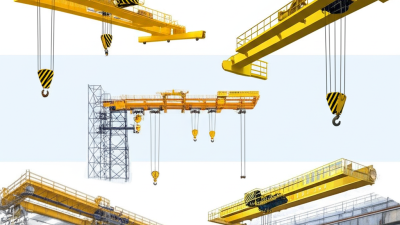
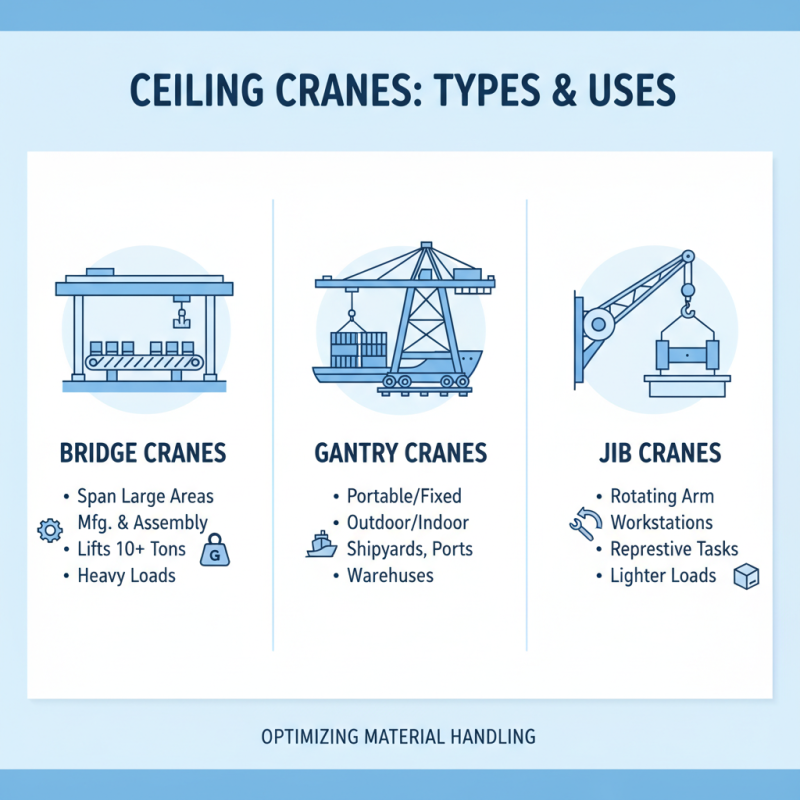
Ceiling cranes come in various types, each designed for specific applications. The most common types include bridge cranes, gantry cranes, and jib cranes. Bridge cranes span large spaces and are ideal for manufacturing and assembly lines. They offer impressive lifting capacities, often exceeding 10 tons, making them suitable for heavy loads.
Gantry cranes are typically used in outdoor settings. They are excellent for loading and unloading containers. Research shows that these cranes can enhance productivity by up to 25%. Jib cranes, on the other hand, excel in small workspaces where movement is needed in a circular pattern. Their compact design allows for flexibility in limited areas.
It's vital to consider the specific application when choosing a ceiling crane. For example, if the workspace has height constraints, a low-profile crane might be necessary. Additionally, weight capacity should align with the maximum load expected. Neglecting these factors could lead to operational inefficiencies. Always assess your workspace layout and lifting requirements to select the most effective crane type.
Safety Features and Compliance Standards to Evaluate
When evaluating ceiling cranes, safety features and compliance standards are paramount. Look for cranes that meet national safety guidelines. These standards serve as a foundation for safe operation. Check for certifications from recognized entities to ensure quality and reliability. Compliance with regulations indicates the crane meets industry benchmarks.
Examine specific safety features. Overload protection is critical. This prevents the crane from lifting beyond its rated capacity. Safety interlocks are also essential; they prevent accidental operation when maintenance is ongoing. Emergency stop buttons should be easily accessible. These details matter significantly in preventing workplace accidents.
Consider the materials used in construction. Steel frames often provide durability and stability. However, the weight of the crane can impact its installation and cost. Regular safety inspections build confidence in the crane's reliability. Reflect on your specific needs, as safety features can vary. A comprehensive evaluation ensures you choose wisely.
What to Consider When Choosing a Ceiling Crane?
This chart illustrates the key safety features and compliance standards to evaluate when choosing a ceiling crane. The data represents the importance of various features as rated by industry professionals.