How to Choose the Best Gantry Crane for Your Business Needs?
In today's fast-paced industrial environment, choosing the right Gantry Crane is critical for operational efficiency. The global market for gantry cranes is forecasted to reach over $2 billion by 2025, driven by increased demand for automation and material handling solutions. With this significant growth, businesses must consider several factors before making a purchase.
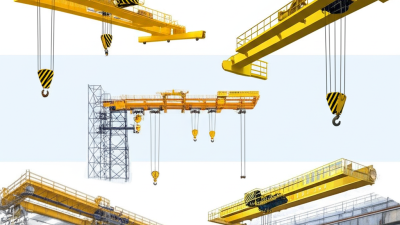
Gantry cranes come in various models and specifications, each designed for specific applications. A crane's lift capacity, span, and mobility are vital considerations. For instance, a heavy-duty crane can lift up to 50 tons, while a portable model may only handle 1-2 tons. Understanding these differences is essential. It can be easy to overlook the specifics when faced with many options. Misjudging needs could lead to increased costs and inefficiencies.
Industrial professionals often cite the importance of safety features and durability. A crane that fails during operation can cause serious accidents. Hence, the reputation of manufacturers and compliance with safety standards cannot be ignored. Investing time in research can yield significant long-term benefits, ensuring the chosen gantry crane enhances productivity while minimizing risks.
Understanding the Different Types of Gantry Cranes Available in the Market
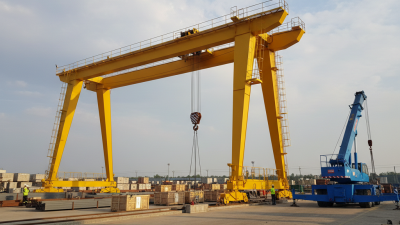
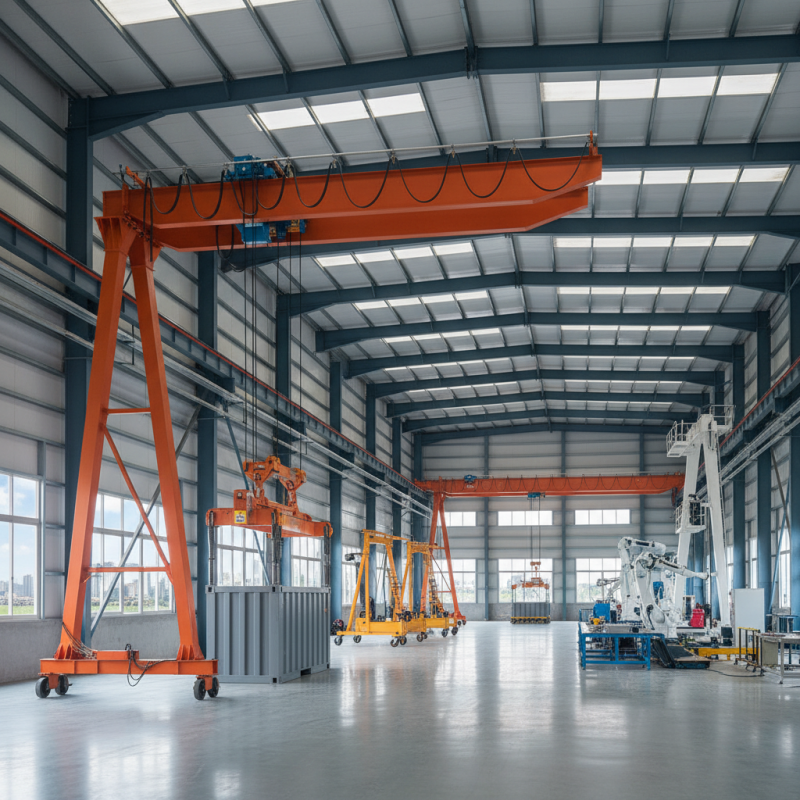
Choosing the right gantry crane involves understanding the various types available. Gantry cranes can be categorized primarily into two types: mobile and fixed. Mobile gantry cranes offer flexibility. They can be easily moved across worksites. This feature makes them ideal for smaller projects.
In contrast, fixed gantry cranes are suited for permanent installations. They are robust and often used in heavy industrial settings. A report by Research and Markets noted that the global gantry crane market is expected to grow by 4.1% annually, highlighting the increasing demand. Most industries favor cranes with lifting capacities ranging from 1 to 10 tons. This range fits a broad spectrum of applications.
Moreover, operating costs are a key consideration. Data indicates that over 30% of crane-related expenses come from maintenance. Regular inspections are crucial to prevent unexpected breakdowns. The choice of material and design also impacts performance. Reflecting on these factors can help maximize the investment. Understanding these nuances will aid in selecting a crane that truly meets business needs.
How to Choose the Best Gantry Crane for Your Business Needs?
| Type of Gantry Crane |
Load Capacity (tons) |
Span Length (meters) |
Height (meters) |
Mobility Options |
| Fixed Gantry Crane |
5 - 20 |
3 - 10 |
2 - 5 |
Static |
| Portable Gantry Crane |
0.5 - 5 |
2 - 4 |
1 - 4 |
Wheeled or Caster |
| Adjustable Gantry Crane |
2 - 10 |
2 - 6 |
1.5 - 4.5 |
Static or Mobile |
| Semi-automated Gantry Crane |
10 - 50 |
5 - 15 |
3 - 6 |
Fixed with Automated Features |
Evaluating Load Capacity Requirements for Effective Crane Selection
When selecting a gantry crane, understanding load capacity requirements is crucial. Start by assessing the maximum weight your operations demand. Consider peak loads during lifting tasks. This evaluation provides insight into whether a standard capacity crane suffices or if a heavy-duty model is necessary.
A common oversight is underestimating future needs. Industries evolve and demands increase. If your current needs are modest, think about projected growth. A crane with a higher load capacity offers flexibility for expansion. However, excessive capacity may lead to unnecessary costs and space usage.
Moreover, safety cannot be compromised. An incorrectly sized crane can lead to accidents and equipment damage. Evaluate load types and distribution methods. Researching different scenarios helps define your requirements accurately. Striking a balance between current tasks and future needs enhances effectiveness. Consistently revisiting these standards is essential for operational efficiency.
Assessing Space Constraints: Sizing Your Gantry Crane for Operational Efficiency
When selecting a gantry crane, understanding space constraints is crucial for operational efficiency. The dimensions of your workspace directly impact the size and type of gantry crane you need. Measure your area carefully. Include height, width, and length. Consider any fixed installations or obstacles. A well-fitted crane enhances safety and functionality.
Tips:
To maximize your workspace, consider adjustable legs or modular designs. These options offer flexibility for different tasks. Think about future growth. If your operations expand, you might need a larger crane. Planning for the future can save time and money.
Additionally, think about the lift height. Ensure the crane can operate without hitting overhead fixtures. Poor clearance can lead to accidents or damage. Always review your layout. Rethink areas that can be optimized better. Small changes can lead to significant efficiency gains.
Gantry Crane Size vs. Load Capacity
This chart illustrates the correlation between gantry crane size and its load capacity. Choosing the appropriate size is crucial for operational efficiency in various business settings.
Key Features to Consider: Durability, Mobility, and Control Systems
Choosing the right gantry crane is crucial for any business. When it comes to durability, look for materials that withstand wear and tear. Steel frames are often a good choice. They resist damages from heavy loads. However, lighter materials are sometimes easier to maneuver. This trade-off is worth considering.
Mobility is another key factor. Some cranes have wheels for easy relocation. Others are fixed, offering stability. A mobile gantry crane can save time when moving between work sites. However, make sure it can still handle your specific load requirements.
Control systems are pivotal in crane operation. Simple controls might suffice for light tasks. Advanced systems offer precision for complex lifting. However, they can require more training. Balancing ease of use with functionality is essential. Reflecting on these aspects can help avoid future operational challenges.
Analyzing Total Cost of Ownership: Price, Maintenance, and Lifespan Factors
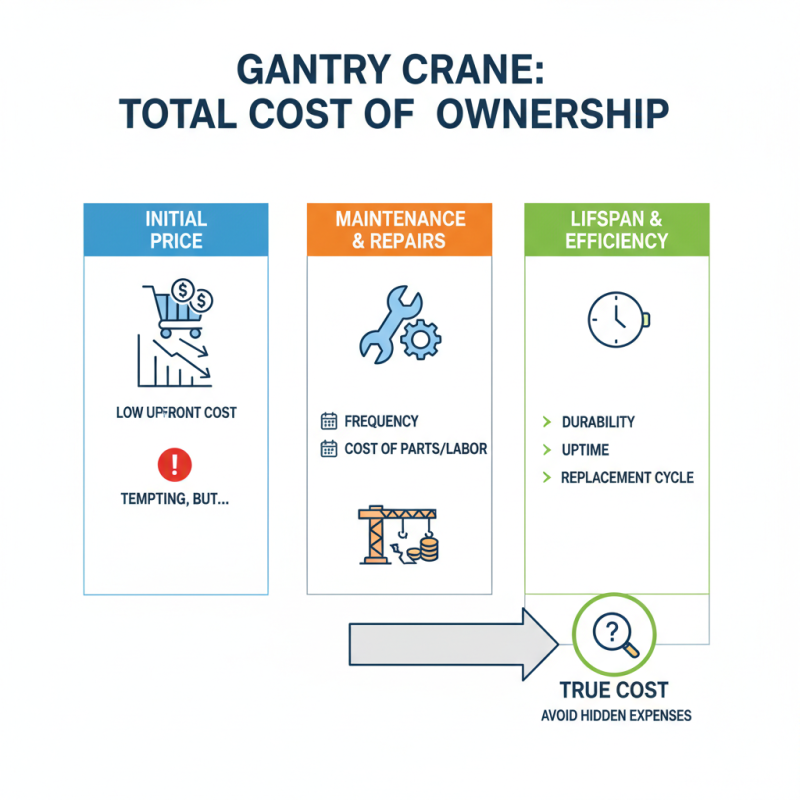
When selecting a gantry crane, understanding the total cost of ownership is crucial. Price, maintenance, and lifespan play significant roles. A low initial price can be tempting, but hidden costs may arise. For example, cheaper models often require more frequent repairs. Consider these factors carefully to avoid unexpected expenses.
Maintenance can significantly impact overall costs. Regular check-ups and minor repairs are necessary to ensure longevity. A crane that requires extensive maintenance could lead to downtime. This not only costs money but also affects productivity. Tips: Always factor in maintenance costs when budgeting. Look for cranes designed for easy servicing, allowing swift access to parts.
Lifespan also deserves consideration. Some cranes are built to last, while others may fail early. Shorter lifespans can mean frequent replacements, increasing your overall expenses. Carefully evaluate the materials and build quality. Tips: Investigate user reviews. They often reveal insights into durability and ongoing performance. Remember, an informed choice can save significant costs in the long run.