Inquiry
Form loading...

How to Choose the Best Indoor Crane for Your Needs?

Choosing the right Indoor Crane can seem overwhelming. There are many options, each designed for specific tasks. The right choice depends on your needs and workspace.

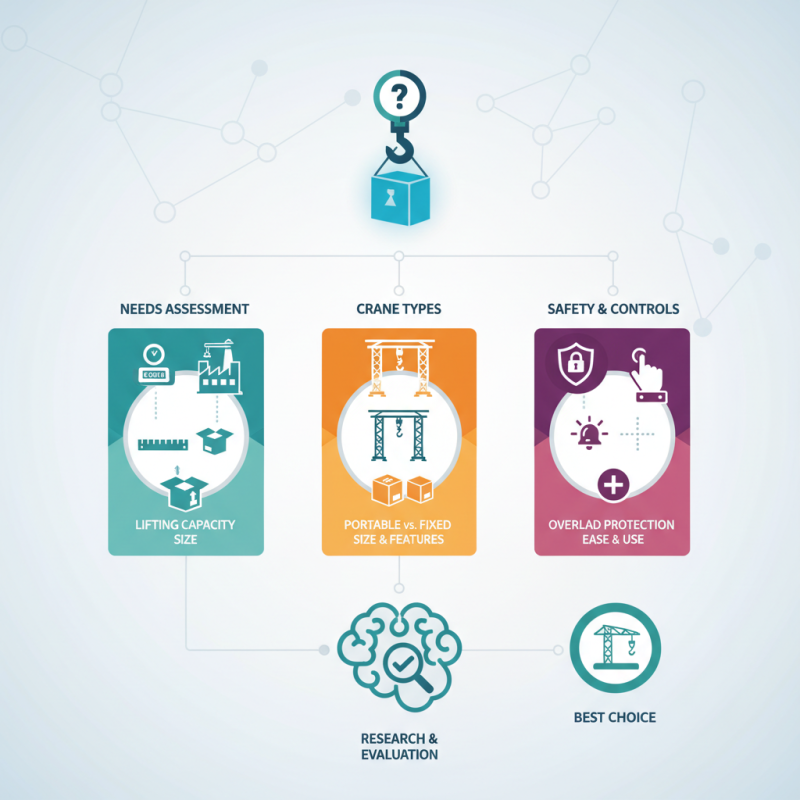
Indoor Cranes are essential for lifting heavy materials. They come in various sizes and types, each with unique features. Some are portable, while others are fixed installations. Think about how much weight you need to lift. Assess your available space. These factors can affect your choice significantly.

It's crucial to consider safety features too. A reliable Indoor Crane should have controls that are easy to use. Look for cranes with overload protection. However, not all models have the necessary safety features. You may find some designs lacking. This makes research and careful evaluation vital. Choosing an Indoor Crane involves reflecting on your specific requirements and understanding the limitations of various models.
How to Choose the Best Indoor Crane for Your Needs?

Understanding the Different Types of Indoor Cranes Available

How to Choose the Best Indoor Crane for Your Needs?

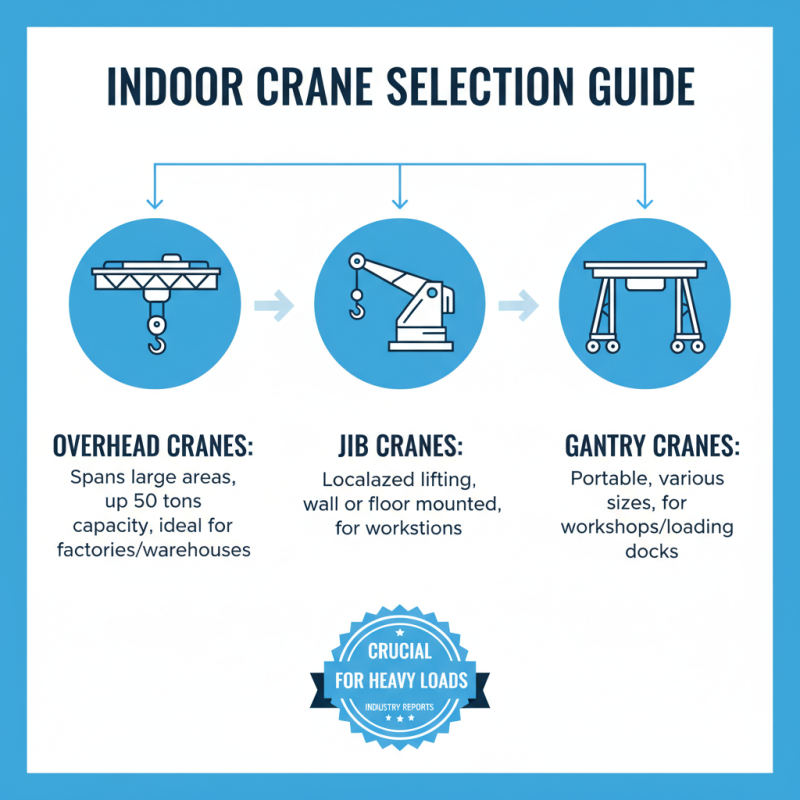
When selecting an indoor crane, understanding the different types available is crucial. Indoor cranes come in various categories: overhead cranes, jib cranes, and gantry cranes. Each type has unique features that cater to specific needs. For instance, overhead cranes are ideal for lifting heavy loads across large areas. According to industry reports, these cranes can handle loads of up to 50 tons. This capacity makes them indispensable in warehouses and factories.

Jib cranes, on the other hand, are more versatile and can be installed in tight spaces. They typically lift lighter loads, averaging around 1 to 3 tons. The design allows for a greater range of motion. However, they may not be suitable for heavier lifting operations. In recent studies, there has been a noticeable trend towards using articulated jib cranes due to their flexibility in restricted spaces.

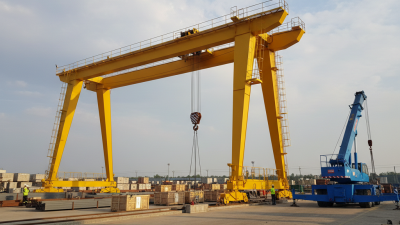
Gantry cranes provide another solution, combining features of both overhead and jib cranes. They can travel on tracks and can hoist significant loads. Reports suggest they can handle loads between 5 to 20 tons. Nevertheless, users must consider the workspace layout. If not planned correctly, these cranes may obstruct other operations. Understanding these nuances helps ensure the right choice for specific lifting tasks.
Key Factors to Consider When Selecting an Indoor Crane

Choosing the right indoor crane requires careful consideration of several factors. One major aspect is the lifting capacity. Most indoor cranes have capacities ranging from 1 ton to over 10 tons. It's important to analyze the weight of your materials. Selecting a crane with insufficient capacity can lead to dangerous situations.

Reach and height are crucial too. A crane must have the proper reach to maneuver materials efficiently. Industry reports indicate that nearly 30% of downtime occurs from improper crane positioning. Evaluate the space in your facility closely to avoid this issue.

Tips: Assess your operational environment. Cranes need enough space to move and store materials. Look for user-friendly controls, especially if your team is inexperienced.

Finally, consider safety features. Sensors and emergency stop systems can prevent accidents. According to safety audits, about 50% of crane-related incidents result from human error. Therefore, automatic features are worth the investment. Ensure regular maintenance is part of your plan. Regular checks reduce risks and improve performance over time.

Assessing Your Workspace Requirements for Crane Functionality

When selecting an indoor crane, assessing your workspace is crucial. Consider the dimensions of your area. Measure the height, width, and length. You'll need a crane that fits snugly but still allows for movement. Doorways and ceilings can affect your choice. The last thing you want is a crane that can’t maneuver into position.

Think about the weight capacity as well. Will the crane need to lift heavy materials? If so, ensure it can handle the load safely. Evaluate the surfaces in your workspace, too. Some cranes may be better suited for concrete floors, while others can navigate uneven terrain. This can limit your options significantly.

Don’t forget flexibility. You might have changing needs over time. A crane that adapts to various tasks can be a great asset. Consider how often you may need to adjust its layout or functionality. Reflect on your current and future requirements. It’s easy to overlook these details, but they can make all the difference in efficiency.

Evaluating Weight Capacity and Safety Features in Indoor Cranes

When choosing an indoor crane, evaluating weight capacity is crucial. A crane's load limit directly impacts its usability. For instance, cranes with a weight capacity of 1,000 pounds may not suit heavier materials often used in construction. In fact, industry reports indicate that about 30% of crane-related accidents stem from exceeding weight limits.

Safety features also play a significant role in performance. Look for cranes equipped with overload protection and emergency shut-off systems. These features help prevent accidents. It’s noteworthy that in environments with limited space, a crane's footprint can greatly affect efficiency and safety. Studies show that cranes with a smaller footprint are often favored, but they must still meet the necessary capacity.

Additionally, consider the design and compatibility with your workspace. Some cranes may offer adjustable height, which adds versatility but can reduce structural integrity if not designed properly. Balancing design with functionality is vital. A well-chosen indoor crane should provide both safety and ease of use, tailored to specific working conditions. Inadequate evaluations can lead to costly mistakes.

Weight Capacity and Safety Features of Indoor Cranes

Cost Analysis: Budgeting for Your Indoor Crane Purchase

When budgeting for an indoor crane, several factors come into play. A basic electric hoist might cost around $1,000, while more advanced models could exceed $5,000. Maintenance costs add another layer. Industry studies suggest that regular upkeep amounts to about 10% of the initial purchase price annually. This can rise based on usage and wear.

Consider the total cost of ownership. Installation can vary widely, often between $200 and $2,000. Companies frequently underestimate these expenses. Inadequate planning here can lead to overspending.

Additional features, like remote control or safety sensors, can increase costs. Yet, they may save money in the long run by reducing accidents. A report from the Occupational Safety and Health Administration highlighted that improved safety features can lead to a 25% reduction in workplace injuries. Think about both immediate costs and long-term benefits when selecting an indoor crane. Avoid pushing the budget limits too far; it could backfire.