How to Choose the Right Gantry Girder for Your Project?
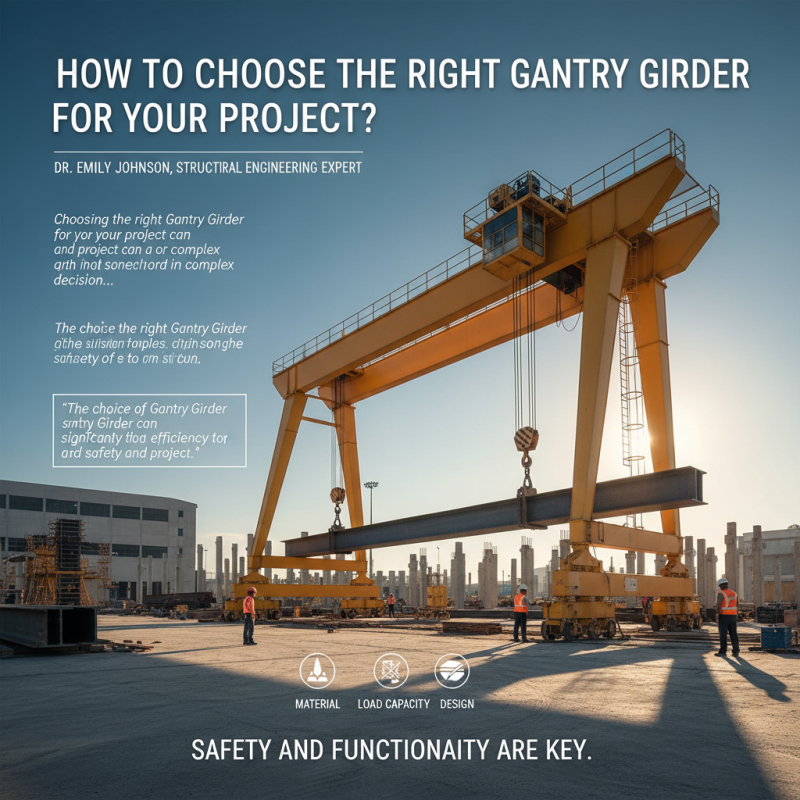
Choosing the right Gantry Girder for your project can be a complex decision. It requires careful consideration of various factors. According to Dr. Emily Johnson, a leading expert in structural engineering, “The choice of Gantry Girder can significantly impact the efficiency and safety of a project.”
Gantry Girders play a crucial role in construction and transportation sectors. They support heavy loads and facilitate movement with precision. Many engineers overlook critical specifications, leading to costly mistakes. One must consider the material, load capacity, and design before making a selection.
It's essential to evaluate each project's unique requirements. A wrong choice could lead to structural issues down the line. Reflection on past projects can offer valuable insights. Engaging with experienced professionals can further enhance decision-making. Remember, selecting a Gantry Girder is not just about aesthetics; it's about safety and functionality.
Understanding Gantry Girders: Types and Functions in Construction
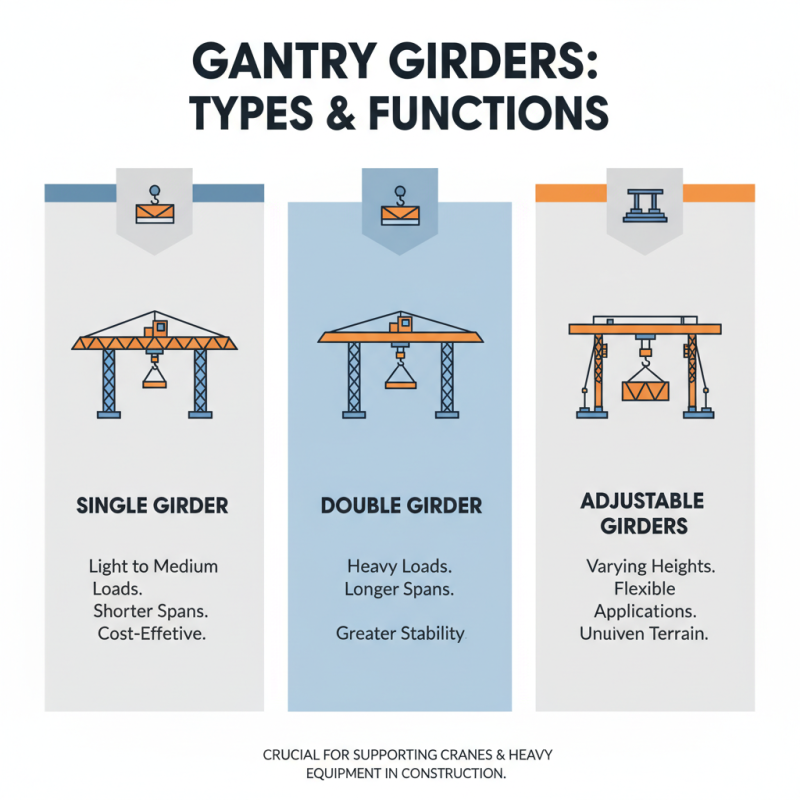
Gantry girders play a crucial role in construction projects. They are pivotal for supporting cranes and heavy equipment. Understanding the different types of gantry girders is essential. The most common types include single girder, double girder, and adjustable girders. Each type serves specific functions suited to various applications.
Single girder systems are lightweight and ideal for low-profile setups. They work well in smaller spaces. Double girder systems offer enhanced lifting capabilities. This makes them suitable for larger operational needs. Adjustable girders provide versatility. They can adapt to changing project requirements, but this variability can lead to complexities in design.
When selecting a gantry girder, consider load capacity and span length. Assess the environment and any potential obstacles. Different materials like steel or aluminum offer their strengths and weaknesses. Steel offers strength, but can be prone to corrosion. Aluminum is lighter, yet may not support heavy loads as effectively. Understanding these aspects can guide you in making an informed decision tailored to your project's needs.
Key Factors for Selecting Gantry Girders: Load Capacity and Dimensions
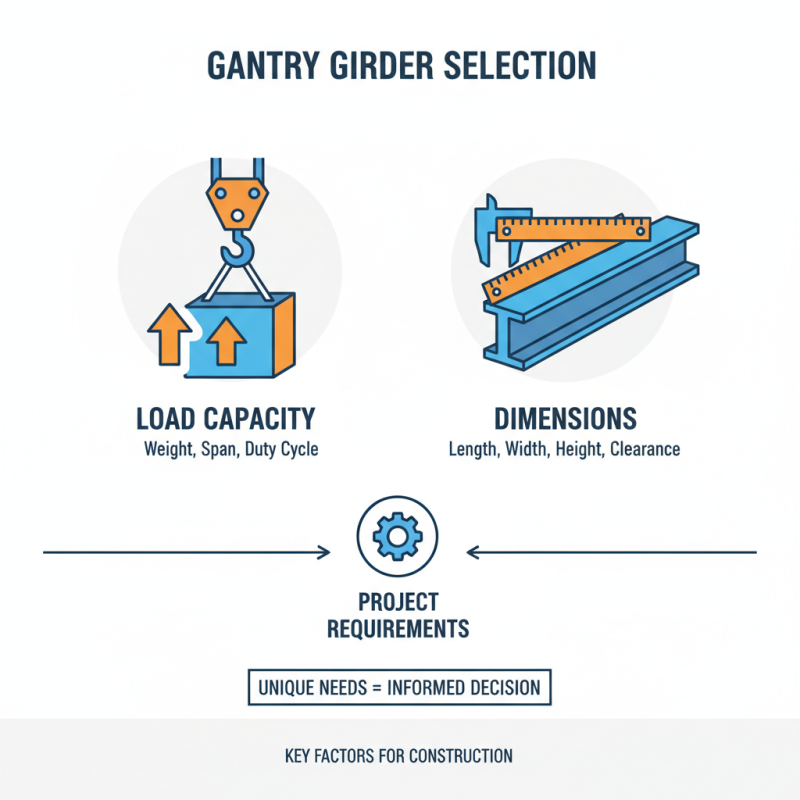
Choosing the right gantry girder is essential for any construction project. When looking at load capacity and dimensions, it’s important to consider the specific requirements of your project. Each project has unique needs, and understanding these can help you make an informed decision.
Load capacity is critical. Calculate the total weight that the girder will support. Overloading can lead to structural failure and safety issues. It’s vital to choose a girder that exceeds your maximum expected load. Also, consider the distribution of the load. Understanding how weight is balanced across the girder will influence your choice.
Dimensions should not be overlooked. Measure the area where the girder will be installed. It should fit comfortably within the available space. If the girder is too large, it can complicate installation. A girder that’s too small may compromise safety.
Tips: Always consult with a structural engineer before finalizing your selection. They possess the knowledge needed to assess your project’s requirements accurately. Utilizing their expertise can prevent costly mistakes and ensure the project’s success. Always revisit your initial calculations periodically. Project requirements can change, and staying flexible helps maintain safety and reliability.
Material Considerations for Gantry Girders: Steel vs. Aluminum
When selecting a gantry girder, material choice is crucial. Steel and aluminum are two common options, each with distinct characteristics.
Steel offers strength and durability, making it ideal for heavy loads. Its resistance to bending and warping is beneficial in rigorous environments. However, it is also heavier, which can complicate installation and transport.
Aluminum, on the other hand, lightens the load. It provides good strength-to-weight ratios and is more resistant to corrosion. This makes it suitable for projects in humid or coastal areas. Yet, aluminum is more prone to deformation under extreme conditions. It may require careful monitoring over time.
Choosing the right material depends on the specific requirements of your project. Consider load capacity, environmental conditions, and installation logistics. It's essential to reflect on these factors. An initial decision may appear beneficial but could lead to complications later.
Balancing strength, weight, and durability will help in making an informed choice.
Industry Standards and Regulations for Gantry Girder Design
When selecting a gantry girder for a project, understanding industry standards is crucial. Regulatory bodies provide guidelines that ensure safety and performance. These standards cover material strength, load capacities, and design parameters. Building codes often specify these elements to meet local and national safety regulations.
Compliance with these standards aids in avoiding structural failures. Engineers should consider factors such as environmental conditions and usage frequency. For example, outdoor structures may require additional corrosion resistance. Understanding these criteria ensures that the girder can withstand expected loads over its lifespan.
It's essential to keep updated with the latest regulations. Standards evolve based on new research and technological advancements. Projects must adapt to these changes to maintain safety and efficiency. Reviewing previous project outcomes can highlight common pitfalls. Learning from past mistakes aids in better decision-making.
Gantry Girder Material Selection for Construction Projects
Cost Analysis: Budgeting for Gantry Girders in Your Project
Budgeting for gantry girders involves careful cost analysis. Depending on the project’s requirements, prices can vary significantly. Steel is a common choice, but the type and thickness can affect the budget. Additional factors include labor costs and installation complexity.
Transportation costs also need consideration. Large girders require specialized transport, which can increase expenses. It's crucial to get multiple quotes. Not all suppliers offer the same value. Sometimes, a lower price can mean compromised quality.
Unexpected costs can arise. For example, if site preparation is inadequate, it can lead to delays and added expenses. Regular communication with the project team helps to mitigate these risks. Transparent budgeting ensures all stakeholders understand the financial landscape. Proper planning can lead to better decision-making.
How to Choose the Right Gantry Girder for Your Project? - Cost Analysis: Budgeting for Gantry Girders in Your Project
| Gantry Girder Type |
Material |
Load Capacity (tons) |
Span Length (meters) |
Estimated Cost ($) |
| Lattice Girder |
Steel |
10 |
15 |
5000 |
| Box Girder |
Steel |
20 |
20 |
12000 |
| I-Beam Girder |
Aluminum |
5 |
10 |
3000 |
| Composite Girder |
Steel/Concrete |
15 |
25 |
8000 |
| Heavy Duty Girder |
Steel |
30 |
30 |
15000 |